The Anglican Spirit of the Riverbank
Clipped from: https://markclavier.substack.com/p/the-anglican-spirit-of-the-riverbank
By Mark Clavier
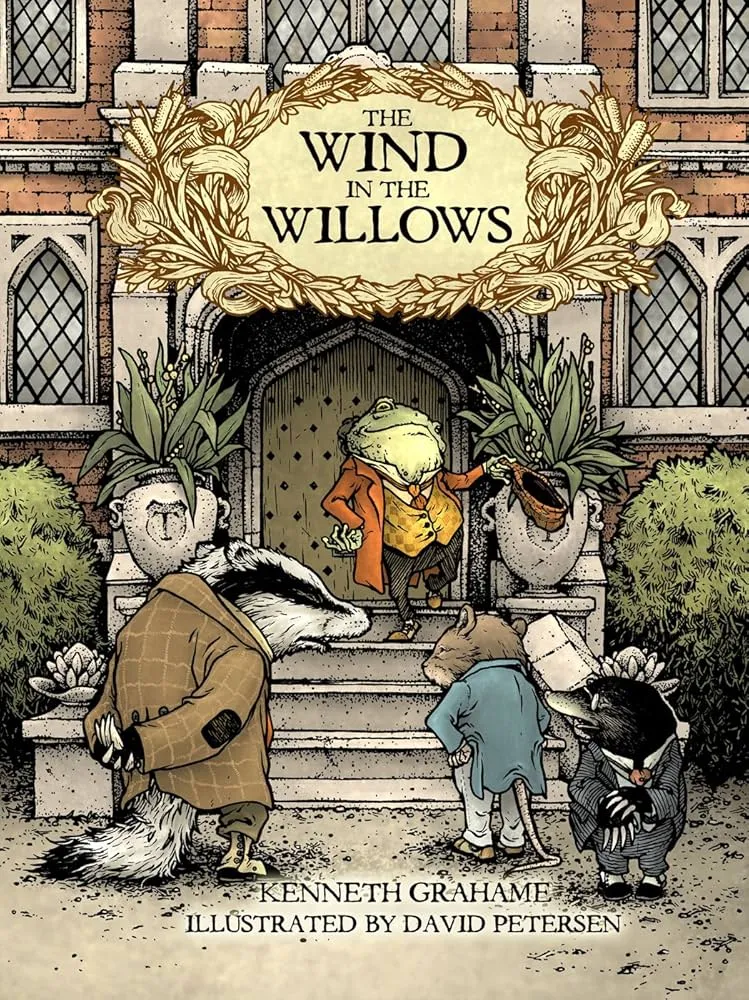
Before the storm of modernity swept through the twentieth century—before speed became the measure of progress and complexity the hallmark of intellect—there was a quiet world along the banks of an English river. In that world, Mole abandoned his spring cleaning to follow a sudden yearning; Rat spoke as one who’d spent his life listening to rivers; gruff Badger kept watch over the woods; and Toad—well, Toad crashed things.
At first glance, The Wind in the Willows (1908) by Kenneth Grahame appears to be a whimsical, nostalgic fable—a comforting relic of Edwardian England. But beneath the picnic hampers and boating jollies is a vision of life that quietly echoes the Anglican soul.
The book communicates a theological imagination through sensibility rather than doctrine. Here, creation isn’t background scenery but holy ground where community unfolds seasonally with ritual and rhythm. Life isn’t a conquest but a kind of faithful dwelling. It’s Anglicanism not in its structures, but in its emotional and spiritual shape: a reverence for place, a high regard for neighbourliness, and a gentle openness to the sacred woven into the natural world.
In this week’s Well-Tempered, I want to wander along the riverbank of The Wind in the Willows and see how it reveals a way of living that feels unmistakably Anglican—calm, rooted, sacramental. I’m not suggesting it captures Anglicanism in all its breadth (and it’s certainly conservative at heart), nor that Grahame set out to pen an Anglican parable. But the world of Rat and Mole could only have been imagined in a place where Anglicanism shaped not just what people believed, but the very air they breathed.
Creation as Sacramental
At the heart of Anglican spirituality is a vision of creation as sacrament—not merely something made by God, but something through which God is instinctively known. It’s the sensibility behind George Herbert’s poems, all of Traherne’s meditations, as well as the cadences of the Book of Common Prayer. This romantic strand of Anglicanism discerns the natural world not as data, but testimony.
The riverbank is practically a parish. Mole’s first glimpse of the river has the wide-eyed awe of a convert. He’s not sure what’s happening—only that the light on the water is doing something to him. Rat, well-schooled in riverine theology, receives him with a line that’s almost a rule of life:
Believe me, my young friend, there is nothing—absolutely nothing—half so much worth doing as simply messing about in boats.
The river isn’t there to be used or conquered. It’s there to be known, abided with. Rat tends to the river’s rhythms like a verger to liturgy: boats kept in good order, food offered at the right hour, silence and companionship held in balance. Mole isn’t catechised—he’s fed. The whole initial picnic scene is a kind of riverside Eucharist.
The landscape itself is draped with moral imagination. The Wild Wood is a place of testing. The open country beckons with danger. But the riverbank is stable, patterned, nourishing. Its cycles echo the church calendar: winter yielding to spring, feasting following boating. Mole and Rat don’t transcend the seasons—they keep them. This is the Anglican imagination: not escapist or abstract, but calmly attentive to creation’s order, finding glory in the ordinary, and grace in the gentle shape of days.
Hospitality, Order, and Liturgy
It’s not only the landscape that reflects an Anglican sensibility. The social life of the riverbank animals forms a kind of liturgical community. Meals are central—prepared with care, offered with warmth, received with a gratitude that invariably yields to conviviality.
A theology of hospitality hums beneath the story’s surface. Mole is welcomed, not interrogated. Toad is admonished, but never cast out. Badger grumbles about visitors but ends up feeding them and offering beds. Rat fusses over provisions not out of neurosis, but because he understands that careful provision is an act of love. Hospitality here is not so much politeness as a kind of sacramental work.
This is what sets the community in The Wind in the Willows apart from many modern portrayals of friendship. These friendships aren’t built on shared interests or ideology. They’re more like neighbourliness—steady, patient, pastoral. Mole and Rat don’t have much in common. Toad is, frankly, exhausting. But they endure each other. They forgive, help, correct, and keep showing up.
And all of it unfolds in order. There’s a rightness to the way things are done. One sets the table. One visits and stays. One answers foolishness with firmness and love. Badger, especially, acts as a moral centre. He guards the Wild Wood to preserve what matters rather than to exclude. All of this results in the delightful—even playful—freedom the animals of the riverbank enjoy. There’s not an ounce of rigidity.
This vision of life—rooted in hospitality, rhythm, and shared care—is deeply liturgical. It reflects the best of parish life: a community formed by commitment and belonging rather than preference or like-mindedness. It may lack a chalice and paten, but God’s grace is found all the same in sandwiches packed for a picnic or in the joy of messing about in boats.
The Weasels: Disorder and the Threat to Sacred Order
No spiritual vision is complete without some sense of what threatens it. In The Wind in the Willows, that threat comes in the form of the weasels, stoats, and ferrets who overrun Toad Hall while Toad’s indisposed. They’re not merely comic villains or chaotic troublemakers. They represent something more sinister: a disruption of the tranquil order that defines riverbank life.
Where the riverbank animals honour hospitality, the weasels seize property. Where Badger and Rat cherish continuity and tradition, the weasels scorn them. They are, in a sense, the forces of anti-liturgy—those who break rather than bless, who take rather than tend. Their occupation of Toad Hall isn’t just an invasion; it’s a kind of desecration.
In this way, the weasels help illuminate the moral ecology of Grahame’s world. They’re not evil in a grand mythic sense—they’re petty, opportunistic, vain. They manifest the ridiculousness of evil. But that’s precisely what makes them such an apt reflection of spiritual disorder. They’re what happens when pride overtakes humility, when appetite tramples gratitude, when community is replaced by control. We become ridiculous.
And yet—even here—the story resists the urge to demonise. The weasels are driven out, but not annihilated. There’s justice, but no vengeance. In the end, even their malice is incorporated into the life of the river. They represent its shadow: a world without reverence, hospitality, or liturgical rhythm. Their presence reminds us what’s at stake in preserving the tranquil order of gentle goodness.
The Mystical Interlude
And then there’s “The Piper at the Gates of Dawn ” —a chapter that seems to drift into the story from another book entirely. It’s always struck me as what the rest of The Wind in the Willows might have felt like if C.S. Lewis had written it. And yet, perhaps it reveals the book’s heart, lifting the curtain for a moment to show the deep, still waters flowing beneath all the mischief and merriment.
The chapter begins with a simple act of charity: Rat and Mole, unable to sleep, set off to help Otter find his missing child. They go without a plan, simply because it feels right. That charity makes them worthy of the beauty they subsequently encounter. As they drift down the river, they’re drawn by strange music—“ so beautiful and strange and new,” Grahame writes, “ that the very air seemed to hum with it.” The mood shifts: jokes disappear. A hush falls. A deep longing overcomes them both.
In a clearing, they encounter a divine presence—Pan, or some primal guardian of nature. But this is no pagan pageant. The Piper doesn’t thunder. He simply plays. He doesn’t preach. He blesses. Mole and Rat fall silent. It’s not power and majesty that awe them here, but sheer beauty that’s peace itself.
The encounter quickly passes. The lost child is found, sleeping safely under the Piper’s protection. The animals can’t quite remember what they’ve seen. But they’re changed.
Though the imagery’s drawn from classical mythology, the heart of the chapter is more Augustinian than pagan. Like Lewis’s weaving of Greek myth into a Christian vision, it’s Anglican in a mystical mode—resting not on argument or definition, but on trust in mystery. Mole and Rat are drawn by a beauty they can’t name, stilled by a presence both awe-inspiring and utterly at home, and left with only a fading memory that awakens a deeper longing. It’s the classic Augustinian pattern: a fleeting foretaste of the divine, meant not to satisfy, but to keep the heart yearning.
Here, Grahame joins the Anglican tradition of Herbert, Traherne, and Lewis—a tradition that understands beauty as sacrament. No explanation’s needed. Only stillness. And wonder.
A Catechism for the Anglican Imagination
To call The Wind in the Willows an Anglican fable isn’t to diminish it, but to recognise its unspoken vocation. The book doesn’t merely reflect a world shaped by Anglican sensibility; it forms one. It’s a kind of catechism for the imagination: a story that teaches without teaching, that lodges in the heart and gently instructs the soul. It forms instincts: to revere creation, to honour the holiness of ordinary life, to treasure friendship, and to attend to the mystery that sometimes slips into the world unannounced.
Anglicanism, at its best, has always understood that often faith isn’t simply taught—it’s inherited, lived, absorbed. And books like this make that possible. They shape the moral imagination that disposes people to a Christianity that’s earthed and neighbourly. If that’s right, then perhaps Anglicanism owes more to The Wind in the Willows —and to Winnie-the-Pooh, and The Chronicles of Narnia —than we tend to admit. Not because these books lay out doctrine, but because they prepare the heart to receive it.
I rather hope that’s the case. I like to think of Mole, Rat, and Badger as wise tutors of the Anglican imagination—worthy, in their own small and furry way, of a place among our greatest worthies.