Eucharistic Sacrifice in the Prayer Book
Clipped from: https://anglicanway.org/eucharistic-sacrifice-in-the-prayer-book/
By Gavin Dunbar
Eucharistic Sacrifice and the Prayer Book
by
In the City of God (10.6), Augustine defines sacrifice as ‘every work which is done that we may be united to God in holy fellowship, and which has a reference to that supreme good and end in which alone we can be truly blessed’. Sacrifice is the action that brings man into communion and fellowship with God. It is in the return of the creature to the Creator, to rest in his infinite goodness, that it attains its end. The New Testament uses the Old Testament language of sacrifice to speak about the death of Christ and the life of Christians, and very early in the church’s history, and perhaps in the New Testament itself, that language is also used for the eucharist. Augustine draws together these three aspects of sacrificial language in the City of God (10.6): the sacrifice of Christ for his body the church, the sacrifice of the church through Christ its head, and the eucharist as the sign by which the church learns to offer itself to God through Christ. Are these sacrifices the same or different, and if so, how? Though opinions varied, only in the 16th century was there an attempt at definitive clarification, and in which the classical Anglican teaching of eucharistic sacrifice emerges.
Medieval Background and Reformation
In ancient times, the norm was but one altar in a church; however, in the West in the Middle Ages, altars proliferated to facilitate the multiplication of masses often celebrated in the absence of any communicants apart from the priest. This multiplication of masses was altogether necessary to the economy, both earthly and heavenly, of the late medieval church: an important source of revenue, and an important means of salvation. The mass was regarded as an efficacious means of intercession for any number of intentions – but especially for the benefit of the faithful departed, the remission of their sins, and their deliverance from the pains of purgatory. The practice of votive masses indicates that it was believed the benefit of the mass could be assigned at the will of the priest to persons not communicating or even present; the multiplication of masses indicated it was thought that the benefit thus obtained by this offering could be quantified and accumulated.
Protest against the use of the mass to speed the passage of souls through purgatory arose in Germany after 1517, in reaction to Tetzel’s marketing of indulgences. In his 1520 treatise on the Babylonian Captivity of the Church, Martin Luther identified three ‘captivities of the sacrament’: the doctrine of transubstantiation, the practice of communion in one kind, and – ‘the most wicked abuse of all’ – the widely received opinion that ‘that the mass is good work and sacrifice’,1 W. R. Russell and T. F. Lull (eds), Martin Luther’s Basic Theological Writings, 2nd ed (Fortress Press, Minneapolis, 2005), 225. which he declared ‘a stumbling block … much greater and the most dangerous of all’.2 Ibid., 234. The priests’ Luther said, ‘have strayed into godless ways; out of the sacrament and testament of God, which ought to be a good gift received, they have made for themselves a good deed performed, which they then give to other and offer up to God’.3 Ibid., 233.
[The priests] all imagine that they are offering up Christ himself to God the Father as an all sufficient sacrifice, and performing a good work for all those whom they intend to benefit, for they put their trust in the work which the mass accomplishes….4 Ibid., 234.
And this abuse has brought an endless host of other abuses in its train, so that the faith of this sacrament has become utterly extinct and the holy sacrament has been turned into mere merchandise, a market, and profit making business. On these the priest and monks depend for their entire livelihood.5 Ibid., 225.
Over against all these things, firmly entrenched as they are, we must resolutely set the word and example of Christ. For unless we firmly hold that the mass is the promise or testament of Christ, as the words [of Institution] clearly say, we shall lose the whole gospel and all its comfort.6 Ibid., 235.
As with much of Luther’s thought, it fell to his friend and disciple Philip Melanchthon to spell out what Luther’s critique meant for the doctrine of Eucharistic sacrifice. In his 1531 Apology of the Augsburg Confession,he distinguished two kinds of sacrifice that must not be confused, even though they are inseparable:
Now there are two, and not more than two, basic kinds of sacrifice. One is the atoning sacrifice, that is, a work of satisfaction for guilt and punishment that reconciles God, conciliates the wrath of God, or merits the forgiveness of sins of others. The other kind is the eucharistic sacrifice. It does not merit the forgiveness of sins or reconciliation but is rendered by those who have already been reconciled as a way for us to give thanks or express gratitude for having received forgiveness of sin and other benefits. In this controversy and in other disputes, we must never lose sight of those two kinds of sacrifices, and we should take special care not to confuse them.7 ‘Apology for the Augsburg Confession’, Article XXIV: the Mass in R. Kolb & T. J. Wengert (eds), The Book of Concord: The Confessions of the Evangelical Lutheran Church (Fortress Press, Minneapolis, 2000), 261.
In addition, Melanchthon insists on the moral content of the eucharistic sacrifice: ‘our opponents twist the word sacrifice until it only includes the mere ceremony’,8 Ibid., 265. but ‘sacrifices of praise’ include: ‘preaching the gospel, faith, prayer, thanksgiving, confession, the afflictions of saints, and indeed all the good works of the saints’.9 Ibid., 262.
Melanchthon based his argument on biblical grounds, especially the Epistle to the Hebrews, but the logic of his position is fundamentally Christological, as the language of distinction and confusion suggests. It belongs to the Reformers’ rethinking of the Augustinian tradition of grace, the church, and the sacraments, in light of the Chalcedonian doctrine of Christ, in which the unconfused distinction of natures, and their inseparable union in the person of the incarnate Son of God, supply a template for man’s participation in Christ, in his righteousness, in his church, and in his sacraments. Thus, justification by faith alone and sanctification in good works that spring from faith are sharply distinguished yet inseparably conjoined in the person of the believer. Likewise, the invisible church of the elect is sharply distinguished but inseparable from the visible church. Likewise, the outward sign is clearly distinguished from the inward reality of the sacraments, though the sign is the means by which the inward reality is received. So also, the propitiatory sacrifice of Christ for sin is distinguished but not separated from the eucharistic sacrifice of the Church. From the Reformers’ point of view, the late medieval church confused the two kinds of sacrifice in a fashion that dishonored Christ, undermined true faith, and led to abusive practices such as the monetization of penance.
Cranmer’s Teaching
Cranmer addresses the topic of ‘the oblation and sacrifice of Christ’ in his 1550 treatise, the Defence of the True and Catholic Doctrine of the Sacrament of the Body and Blood of Christ. Though briefer than the preceding chapters on Presence and Transubstantiation, its brevity is not a sign of lesser importance:
The greatest blasphemy and injury that can be against Christ, and yet universally used throughout the popish kingdom, is this, that the priest make their mass a sacrifice propitiatory, to remit the sins as well of themselves, as of other, both quick and dead, to whim they list [i.e., wish] to apply the same. Thus under pretence of holiness, the papistical priests have taken upon them to be Christ’s successors, and to make such an oblation and sacrifice as never creature made but Christ alone, neither he made the same any more times than once, and that was by his death upon the cross.10 J. Edmund Cox (ed), Writings and Disputations of Thomas Cranmer Relative to the Sacrament of the Lord’s Supper (Parker Society, Cambridge University Press, 1844; reprinted by Regent College Publishing, 2000), 345.
The Christological grounds of this objection to the sacrifice of masses is evident:
the offering of the priest in the mass, or the appointing of his ministration at his pleasure, to them that be quick or dead, cannot merit and deserve, neither to himself, nor to them for whom he singeth or saith, the remission of their sins; but that such popish doctrine is contrary to the doctrine of the gospel, and injurious to the sacrifice of Christ. For if only the death of Christ be the oblation, sacrifice, and price wherefore our sins be pardoned, then the act or ministration of the priest cannot have the same office. Wherefore it is an abominable blasphemy to give that office or dignity to a priest, which pertaineth only to Christ; or to affirm that the church hath need of any such sacrifice: as who should say, that Christ’s sacrifice were not sufficient for the remission of our sin or else that his sacrifice should hang upon the sacrifice of a priest.11 Ibid., 348.
Cranmer follows Melanchthon in his teaching about the distinction of sacrifices: ‘that all men may the better understand the sacrifice of Christ, which he made for the great benefit to all men, it is necessary to know the distinction and diversity of sacrifices’:12 Ibid., 346.
One such sacrifice there is, which is called a propitiatory or merciful sacrifice, that is to say, such a sacrifice as pacifieth God’s wrath and indignation, and obtaineth mercy and forgiveness for all our sins, and is the ransom for our redemption from everlasting damnation. … Another kind of sacrifice there is which doth not reconcile us to God, but is made of them that be reconciled by Christ, to testify our duties unto God, and to show ourselves thankful unto him. And therefore they be called sacrifices of laud, praise, and thanksgiving.
The first kind of sacrifice Christ offered to God for us; the second kind we ourselves offer to God by Christ. And by the first kind of sacrifice Christ offered also us to unto his Father; and by the second we offer ourselves and all that we have unto him and his Father.13 Ibid., 346.
For Cranmer also, the sacrifice of praise and thanksgiving is not merely ceremonial but also moral: ‘his sacrifice is generally our whole obedience unto God, in keeping his laws and commandments’:14 Ibid., 349.
The Prayer Books of 1549 and 1552
And forasmuch as he hath given himself to death for us, to be an oblation and sacrifice to his Father for our sins, let us give ourselves again unto him, making unto him an oblation, not of goats, sheep, kine, and other beasts that have no reason, as was accustomed before Christ’s coming, but of a creature that hath reason, that is to say, of ourselves; not killing our own bodies, but mortifying the beastly and unreasonable affections that would gladly rule and reign in us.15 Ibid.
While Cranmer follows the emergent Protestant theological consensus on the theology of eucharistic sacrifice, in his liturgical projects he makes a distinctive contribution in his renovation of the western tradition of eucharistic prayer embodied in the ancient Roman canon of the mass, and his transformation of it into what later Anglicans called the Prayer of Consecration. The sacrificial language of the Canon of the Mass made it abhorrent to the Reformers, and as a result, in most other Protestant reforms of the liturgy the only element retained from the canon was the Institution narrative, detached from any prayer, and read apparently as a kind of warrant for or exhortation about the sacrament. Cranmer’s liturgical project – his recasting of the canon of the mass in accord with the evangelical doctrine of eucharistic sacrifice – is thus bold and original. The other Reformers instructed and exhorted the congregation about eucharistic sacrifice; Cranmer wanted them to pray it.
Continuity with the Roman rite is most apparent in the liturgy of 1549, with its long eucharistic prayer loosely following the overall shape of the Roman canon; but it is in the rearrangement of those materials in 1552, maintained with minor changes in 1559 and 1662, that he achieves the greatest clarity of form. In the Roman canon, the thought moves from the church’s offering of the elements, to God’s acceptance of the offering, to the benefits that flow from his acceptance of the offering, and the reception by the faithful of Christ’s body and blood. Throughout his revision of the Canon, Cranmer is intent to apply the template of Chalcedonian Christology, distinguishing sharply without confusion or separation between outward visible sign and inward invisible grace, Christ’s sacrifice for sin, and the Church’s sacrifice of praise and thanksgiving.
The Address to the Father
The Roman canon consists of several short prayers, known by their opening words.16 Latin and English on facing pages are found in B. Thompson (ed), Liturgies of the Western Church, (Fortress Press, Philadelphia, 1961), 72. In the four prayers before the institution narrative, Te igitur, Memento Domine, Communicantes,and Hanc igitur, there is intercessory material, which Cranmer relocated in the Prayer for the Church. Some of the sacrificial language he deleted is as follows: ‘for whom we offer, or who offer up this sacrifice of praise for themselves and theirs’; and those ‘who pay their vows to thee’ – thus eliminating the idea that the benefits of the offering might be assigned at the priest’s will to persons who were not communicating or present. Some of it he reserved for use elsewhere, especially the phrase ‘sacrifice of praise’. Likewise, deleted are prayers for God to ‘receive and bless these gifts, these offerings, this holy and unblemished sacrifice’, a reference to the elements.
Thus, almost all the specific content of those four prayers disappears, yet Cranmer retains the language of sacrifice and applies it not to the church’s offering and intercession but to Christ’s death on the cross:
Almighty God oure heavenly father, whiche of thy tender mercye dyddest geve thine onely sonne Jesus Christ, to suffre death upon the crosse for our redempcion, who made there (by hys one oblacion of hymselfe once offered) a full, perfecte and sufficiente sacrifice, oblacion, and satisfaccion, for the synnes of the whole worlde, and dyd institute, and in hys holye Gospell commaund us to continue, a perpetuall memorye of that his precious death, untyll hys comynge agayne.
Late-20th-century eucharistic prayers focus greatly on the economic Trinity – God’s acts ad extra in creation, redemption, and sanctification – but Cranmer’s focus is the theological Trinity, the relations of the persons, the first two persons explicitly named, the third often implicit. The thought moves from the Father’s gracious initiative in giving his Son ‘to suffer death upon the cross for our redemption’ to the Son’s obedient self-giving in sacrifice for sin: ‘hys one oblacion of hymselfe once offered) a full, perfecte and sufficiente sacrifice, oblacion, and satisfaccion, for the synnes of the whole worlde’. Cranmer’s prayer has been criticized for its narrow focus on the motif of sacrifice; and modern eucharistic prayers have sought to enlarge the thematic territory of eucharistic praying, but this effort misses the point. It is communion with God that is the end being sought in eucharistic prayer, and since sacrifice is, as Augustine says, the act that unites human beings in communion with God, in a rite of ‘holy communion’, the language of sacrifice is most relevant. Cranmer’s address to the Father indicates the sacrifice must be understood in terms of the Father’s relation to the Son, and the Son’s relation to the Father. The communion it establishes is a communion with the Father and the Son, through the Son’s coming forth and return to the Father in our humanity. In sacrifice, the faithful are caught up into the Son’s return to the Father.
In this address to the Father, Cranmer wove together a tissue of scriptural allusion (Luke 1:78 for ‘tender mercy’, John 3:16 for ‘didst give thine only begotten Son’, 1 John 2:2 for ‘the sins of the whole world’), but from the Epistle of the Hebrews he draws ‘one oblation of himself once offered’. This is the hapax that underlines the once-for-all character of Christ’s death as the definitive mediation of God and men. As Oliver O’Donovan says of the English Reformers,
their concern was ‘eschatological’. … The ‘once for all’ of the Epistle to the Hebrews determines the shape of history: it declares that Christ is its climax and completion, in which redemption is totally present and to which nothing remains to be added – save for the final ‘appearing’.17 O. O’Donovan, On the Thirty Nine Articles: A Conversation with Tudor Christianity (Latimer House, Oxford, Paternoster Press, Exeter, 1986), 123.
In Te igitur, the Roman canon had used a triad of terms to describe the church’s offering: ‘these gifts, these offerings, these holy and unblemished sacrifices’. In their place, Cranmer used a doubled triad to refer not to the church’s offering but to Christ’s: ‘a full, perfect, and sufficient sacrifice, oblation, and satisfaction for the sins of the whole world’. The eschatological character of this once-for-all sacrifice has its counterpart in Christ’s institution of the sacrament: ‘and dyd institute, and in hys holye Gospell commaund us to continue, a perpetuall memorye of that his precious death, untyll hys comynge agayne’. There the words ‘perpetual memory’ close off the possibility of repetition or supplementation, and ‘until his coming again’, the completeness to which nothing need be added save for its final appearing as O’Donovan notes. Christ’s sacrifice is situated at the defining center of all human history, equally potent in every age and place.
The Prayer for Consecration
The final prayer before the institution narrative in the Roman canon, called Quam oblationem, is a petition for the consecration of the elements:
which offering do thou, O God, vouchsafe in all things to bless, consecrate, approve, make reasonable and acceptable, that it may become for us the Body and Blood of thy most beloved Son our Lord Jesus Christ.
In 1549, Cranmer was content to retain the general line of thought:
Heare us (O merciful father) we besech thee; and with thy holy spirite and worde, vouchsafe to blesse and sanctifie these thy gyftes, and creatures of bread and wyne, that they maie be unto us the bodye and bloude of thy moste derely beloved sonne Jesus Christe.
In the 1549 version, however, the words ‘which offering’ – i.e., the ‘gifts we are offering’ are replaced by ‘ thy gifts and creatures’. (This is language perhaps suggested by the phrase in the prayer, Unde Et Memores, ‘of thine own gifts bestowed upon us’.) What’s significant here is Cranmer’s insistence that the only movement from man to God is that of Christ not of the church – so even the elements set on the table by the priest are described in terms of a movement from God to man, not from man to God. They are his gifts to us, not ours to him. When this prayer was rewritten in receptionist terms in 1552, the language of ‘thy creatures of bread and wine’ was retained.
In the Roman rite, the institution narrative is followed by Unde et memores:
Wherefore, O Lord, we thy servants … remembering the blessed passion of the same Christ thy Son our Lord, and also his rising up from hell, and his glorious ascension into heaven, do offer unto thy excellent majesty, of thine own gifts bestowed upon us, a pure victim, a holy victim, a spotless victim, the holy bread of eternal life and the chalice of everlasting salvation.
In 1549, Cranmer retained much of this formula, but rather pointedly removed the language of offering. He replaced ‘do offer unto thy excellent majesty’, with ‘do celebrate, and make here before thy divine Majestie’. He deleted ‘a pure victim, a holy victim, a spotless victim, the holy bread of eternal life and the chalice of everlasting salvation’, and replaced it with ‘the memoryall whyche thy sonne hath wylled us to make’. Though the language of ‘memorial’ replaces the language of offering, 1549 still seems to allow a Godward action linked to the elements: ‘we thy humble servauntes do celebrate, and make here before thy divine Majestie, with these thy holy giftes, the memoryall whyche thy sonne hath wylled us to make’. Perhaps for this reason, however, this paragraph disappears altogether in 1552.
For in the 1552 Prayer Book, Cranmer reordered the 1549 prayer. Instead of one long prayer resembling the Roman canon, he divided it into two blocks of prayer on either side of the distribution of the elements. The first block consists of the 1549 address to the Father, a reworded petition for consecration, and the institution narrative. After the delivery of the elements, there follows a second block, consisting of the Lord’s Prayer, a choice of two prayers (one of Oblation, the other of Thanksgiving) leading to the canticle Gloria in excelsis.18 The first of these two prayers after the Lord’s prayer, a prayer of oblation, is based on the post-institution narrative portion of 1549. The second is the 1549 post-communion prayer of thanksgiving for the benefits of communion. In this way, the new order of 1552 sharply distinguishes Christ’s once-for-all sacrifice for sin (in the prayer before communion) from the Church’s continual sacrifice of praise and thanksgiving (in the prayers after communion). They are both distinguished but also united – for it is by communion in the fruits of his sacrifice for us, and only on that basis, that the church is moved to offer itself in sacrifice by him. This is apparent in the 1552 form of delivery:
Take and eat this in remembrance that Christ died for thee, and feed on him in thine heart by faith, with thanksgiving. Drink this in remembrance that Christ’s blood was shed for thee, and be thankful.
The older form of delivery, was based on the Roman rite, followed Christ’s words at the Last Supper: ‘This is my body’ and ‘This is my blood’. The new formula was also based on Christ’s words at the Supper (‘Take, eat … in remembrance of me’), but now the focus is on the outward action of taking, eating, and drinking the elements in remembrance of Christ, and on the inward feeding on him, ‘by faith with thanksgiving’. The formula for the cup ends in a similar fashion, be thankful’. Basil Hall notes that the change in the form of delivery is often described ‘as stressing a remembered rather than a present Christ’, but he points out that the command to ‘feed upon Christ by faith’ as the elements are being received both implies a present Christ and a spiritual feeding not separated from the physical. Christ is not absent, nor present only figuratively, but by his power he is effectually present to feed and nourish the soul.19 B. Hall, ‘Cranmer, the Eucharist, and the Foreign Divines in the Reign of Edward VI’ in P. Ayris & D. Selwyn (eds), Thomas Cranmer: Churchman and Scholar (The Boydell Press, Woodbridge, UK, 1993), 243. It is striking that this stress on remembrance is united with an exhortation to give thanks. Memory is the matrix of hope, as is grace of gratitude. It is a hint that by communion with Christ in his sacrifice for its sins, the believing church is moved to offer itself in praise and thanksgiving, which is the focus of the prayers after communion.
Prayers After Communion
If the prayer before communion commemorates Christ’s once-for-all sacrifice for sin, the prayers after communion are the Church’s offering of praise. As such, they mark the culmination of a movement toward a goal that was identified at the very outset of the service, in the Lord’s Prayer and the Collect for Purity. The conjunction of ‘hallowed be thy name’ and ‘worthily magnify thy holy name’ established the end of worship as a return to God in doxology effected by His Word and Spirit.
This ‘drive to doxology’ reappears after the Ante-communion, in the Confession of sin, ‘to the honor and glory of thy name’, and in the common Preface before the Sanctus, ‘we laud and magnify thy holy Name’. In the intervening Absolution and Comfortable Words, it established that the return to God is effected by Christ, who comes forth from God ‘to save sinners’ and returns to God as ‘our advocate with the Father’. The Comfortable Words thus prepare the way for the exitus and reditus commemorated in the Prayer of Consecration – the Father’s gift of the Son for our redemption, and the Son’s self-giving of himself to the Father in sacrifice for our sins. The new recital of the Lord’s Prayer after the distribution of the elements indicates a renewed communion with God in Christ, in which the drive to doxology has attained its goal.
The structure of the post-communion prayers that follow the Lord’s Prayer is essentially that set forth in the Lord’s Prayer – whose first three petitions are devoted to the praise of God’s glory (doxology), and whose last four petitions express grateful dependence on his grace. In the prayer of Oblation, two clauses about the church’s eucharistic offering of praise and thanksgiving are each followed by two clauses praying for the grace of the eucharist, and likewise in the Gloria in excelsis, the opening praise of God the Father is followed by a prayer to God the Son. God’s majesty is manifested in his mercy, and the glory we praise is manifested in the grace we pray for.
Prayer of Oblation
Cranmer’s first post-communion prayer in 1552 – the prayer of Oblation – was loosely based on the prayer that follows the institution narrative in the Roman canon – Supra quae, Supplices te rogamus, Memento etima, and Nobis quoque. Supra quae isa prayer for the acceptance of the church’s offering identified with the elements: ‘as thou wert graciously pleased to accept the gifts of thy just servant Abel, and the sacrifice of our patriarch Abraham, and that which they high priest Melchisedec offered to thee, a holy sacrifice, a spotless victim’. Cranmer retains the theme of acceptance of the church’s offering, but now redefined (in the language of Memento Domine and Hanc oblationem that he had earlier set aside) as the offering of ‘this sacrifice of praise’ and as prayers for the benefits of redemption:
we thy humble servaunts entierly desire thy fatherly goodnes, mercifully to accept this our Sacrifice of prayse and thanksgeving: most humbly beseching thee to graunt, that by the merites and death of thy sonne Jesus Christe, and through fayth in his bloud, we and al thy whole church may obtayne remission of oure synnes, and all other benefytes of his Passion.
As in the Lord’s Prayer, first God’s glory is acknowledged by the offering of praise (for which we seek God’s acceptance), and then dependence on his grace, in the prayer for the benefits of Christ’s passion – because the glory we praise is shown forth in his grace to sinners. Our offering of praise and thanks to God for this sacrifice of Christ makes it proper for us to pray that it might have its full effects in the faithful.
The same pattern obtains in the replacement of Supplices rogamus. There, the priest prayed that God would:
command these things [sc the elements offered by the church] to be borne by the hands of thy holy angel to thine altar on high in the sight of thy divine majesty, [viz, with the result] that as many of us as at this altar shall partake and receive the most holy Body and blood of thy Son may be filled with every heavenly benediction and grace.
The Reformers retained the motif of ascension in heart and mind in the Sursum Corda, because the faithful are called to lift up their minds from the visible earthly sign to the invisible reality known by faith alone. But here Cranmer deletes the motif of the ascension in reference to the elements and replaces it with the sacrificial language of Rom 12:1: ‘And here wee offre and present unto thee (O Lorde) oure selfe, oure soules, and bodies, to be a reasonable, holy, and lively sacrifice unto thee’. This petition makes clear that the eucharistic sacrifice is located not in the offering of the elements, but of the souls and bodies of the worshippers. As Cranmer said, ‘his sacrifice is generally our whole obedience unto God, in keeping his laws and commandments’. In accord with the Lord’s Prayer’s template of praise of glory and prayer for grace, the self-offering of the worshippers is followed by a prayer for their fruitful reception of communion: ‘humbly besechyng thee, that whosoever shalbee partakers of thys holy Communion, maye worthely receive the most precious body and bloude of thy sonne Jesus Christe: and bee fulfilled with thy grace and heavenly benediccion’.
From the last two prayers of the Roman canon, Memento etiam and Nobis quoque, one idea was retained: ‘not considering our merit, but of thine own free pardon’. It is an acknowledgement of sinfulness which undercuts any notion of meritorious work being accomplished by the offering of sacrifice. Cranmer expands the idea:
And although we bee unworthy throughe oure manifolde sinnes to offre unto thee any Sacrifice: yet we beseche thee to accept this our bounden duetie and service, not weighing our merites, but pardoning our offences, through Jesus Christ our Lord.
The ‘drive to doxology’ resumes in the conclusion of this prayer: ‘by whom and with whom, in the unitie of the holy ghost, all honour and glory bee unto thee, O father almightie, world without ende. Amen’.
In the alternative prayer after communion, the sacrifice of praise modulates into the giving of thanks for the benefits of communion and of prayer for continuance in the fellowship they confer and in ‘the good works which thou has prepared for us to walk in’ (an echo of Eph 2:10). Though the language is different, the basic thought is the same: God is glorified and His grace is sought. This prayer likewise ends with doxology: ‘through Jesus Christ our Lord, to whom, with thee and the holy ghost, be all honour and glorye, world without ende. Amen’. These doxologies prepare us for the great Doxology that follows, the Gloria in excelsis, an exultant release of joy. Like the Lord’s Prayer and the prayers after communion, its structure is fundamentally twofold – an expression of devotion to God’s glory, and of His dependence on the grace of His Son.
This twofold structure is suggestive of the ‘now and not yet’ of the kingdom, the participation of the faithful in Christ in two modes – giving glory to God for the finished work of redemption, and making prayer for its realization in the faithful. So the glory we give to God in the sacrifice of praise and thanksgiving is an acknowledgement of that perfected purpose, the eschaton mankind has attained in Christ; and the grace we seek from him is the fulfilment of this eschaton in us, the work of his Spirit. By his eschatological sacrifice, man returns to God and attains his end in Him. Many contemporary eucharistic prayers trace the action of God with its apparent end to the world’s transformation. Cranmer’s prayers are on surer ground in tracing the action of God by which the world attains its true end in Him.
In common with the other Reformers, Cranmer brings a lucid Christocentric clarity to the confusions that had enveloped the theology and practice of eucharistic sacrifice in the later Middle Ages. Alone of the Reformers, he brought this new clarity to bear on the reform of the liturgy, so that what the other reformers expressed in exhortation and instruction is made the substance of the church’s prayer. In this regard, as in so many others, he has much to teach contemporary Christians about eucharistic sacrifice and its liturgy.
Share
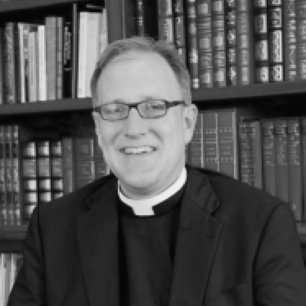
The Revd Gavin G. Dunbar is President of the Prayer Book Society (USA) and Rector of St John’s, Savannah. He studied classics at the University of Toronto and Dalhousie University, Halifax, and theology at Wycliffe College, Toronto.
Footnotes
- 1
W. R. Russell and T. F. Lull (eds), Martin Luther’s Basic Theological Writings, 2nd ed (Fortress Press, Minneapolis, 2005), 225. - 2
Ibid., 234. - 3
Ibid., 233. - 4
Ibid., 234. - 5
Ibid., 225. - 6
Ibid., 235. - 7
‘Apology for the Augsburg Confession’, Article XXIV: the Mass in R. Kolb & T. J. Wengert (eds), The Book of Concord: The Confessions of the Evangelical Lutheran Church (Fortress Press, Minneapolis, 2000), 261. - 8
Ibid., 265. - 9
Ibid., 262. - 10
J. Edmund Cox (ed), Writings and Disputations of Thomas Cranmer Relative to the Sacrament of the Lord’s Supper (Parker Society, Cambridge University Press, 1844; reprinted by Regent College Publishing, 2000), 345. - 11
Ibid., 348. - 12
Ibid., 346. - 13
Ibid., 346. - 14
Ibid., 349. - 15
Ibid. - 16
Latin and English on facing pages are found in B. Thompson (ed), Liturgies of the Western Church, (Fortress Press, Philadelphia, 1961), 72. - 17
O. O’Donovan, On the Thirty Nine Articles: A Conversation with Tudor Christianity (Latimer House, Oxford, Paternoster Press, Exeter, 1986), 123. - 18
The first of these two prayers after the Lord’s prayer, a prayer of oblation, is based on the post-institution narrative portion of 1549. The second is the 1549 post-communion prayer of thanksgiving for the benefits of communion. - 19
B. Hall, ‘Cranmer, the Eucharist, and the Foreign Divines in the Reign of Edward VI’ in P. Ayris & D. Selwyn (eds), Thomas Cranmer: Churchman and Scholar (The Boydell Press, Woodbridge, UK, 1993), 243.